




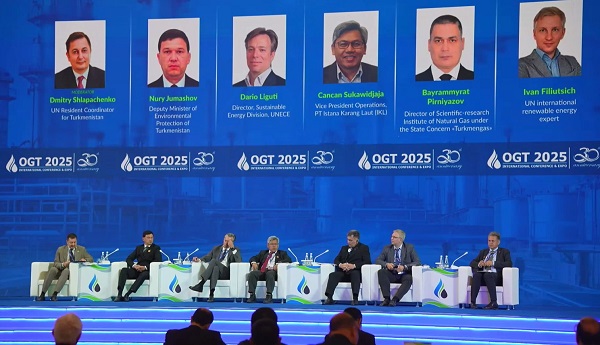
Turkmenistan is demonstrating notable progress in reducing methane emissions through the implementation of advanced satellite monitoring systems and proactive measures at production facilities. This was announced by Bayrammyrat Pirniyazov, Director of the Research Institute of Natural Gas of the SC “Turkmengaz,” during a panel discussion at the International Conference “Oil and Gas of Turkmenistan 2025” (OGT 2025).
Satellite Monitoring Delivers Quick Results
To increase the effectiveness of methane emission control, the SC “Turkmengaz” is utilizing digital and space technologies as part of a joint plan developed with the United Nations Environment Programme (UNEP).
MARS System Implementation: Since March 2024, data on methane emission sources detected by artificial space satellites have been systematically fed into the digital platform “Methane Emissions Alert and Response System (MARS).”
Cooperation with Capterio: Data from the company Capterio, which conducts continuous satellite monitoring of flaring sources, is also actively being used.
“The MARS system has recorded noticeable results in reducing methane emissions at the SC ‘Turkmengaz’ production facilities. For instance, over the nine months of the current year, emissions were reduced to an average of 11.6 tonnes/day compared to an average of 22.9 tonnes/day over seven months last year, and in some months, no emissions were recorded at all,” explained Pirniyazov.
Furthermore, a special group has been created at the Concern’s enterprises to identify the main sources of organized and unorganized emissions and develop specific measures to eliminate or reduce them.
Darvaza Crater: Fire Fading and Reservoir Depletion
Bayrammyrat Pirniyazov separately commented on the situation concerning one of the largest unorganized emission sources—the Darvaza crater, known as the “Gates of Hell,” which has been burning since 1963.
According to data from Capterio, the intensity of the crater’s burning has decreased by approximately 3 times during the monitoring period from April 2023 to the present.
The speaker explained that the crater was formed as a result of a drilling accident on the Chaldzhulba structure of the Zeagli-Derweze field group, and gas continues to feed it to this day.
Work carried out (decommissioning and development of wells Nos. 11, 12, and 5) indicated low reservoir pressure and partial water encroachment, suggesting the depletion of the productive horizon that feeds the crater.
For field management, a newly drilled well (No. 4) targeting deeper horizons was commissioned in December 2024.
“While previously the huge blazing fire could be seen for many kilometers around, now, according to the institute director, only small pockets of burning remain,” concluded Pirniyazov.